How This Site Came Together
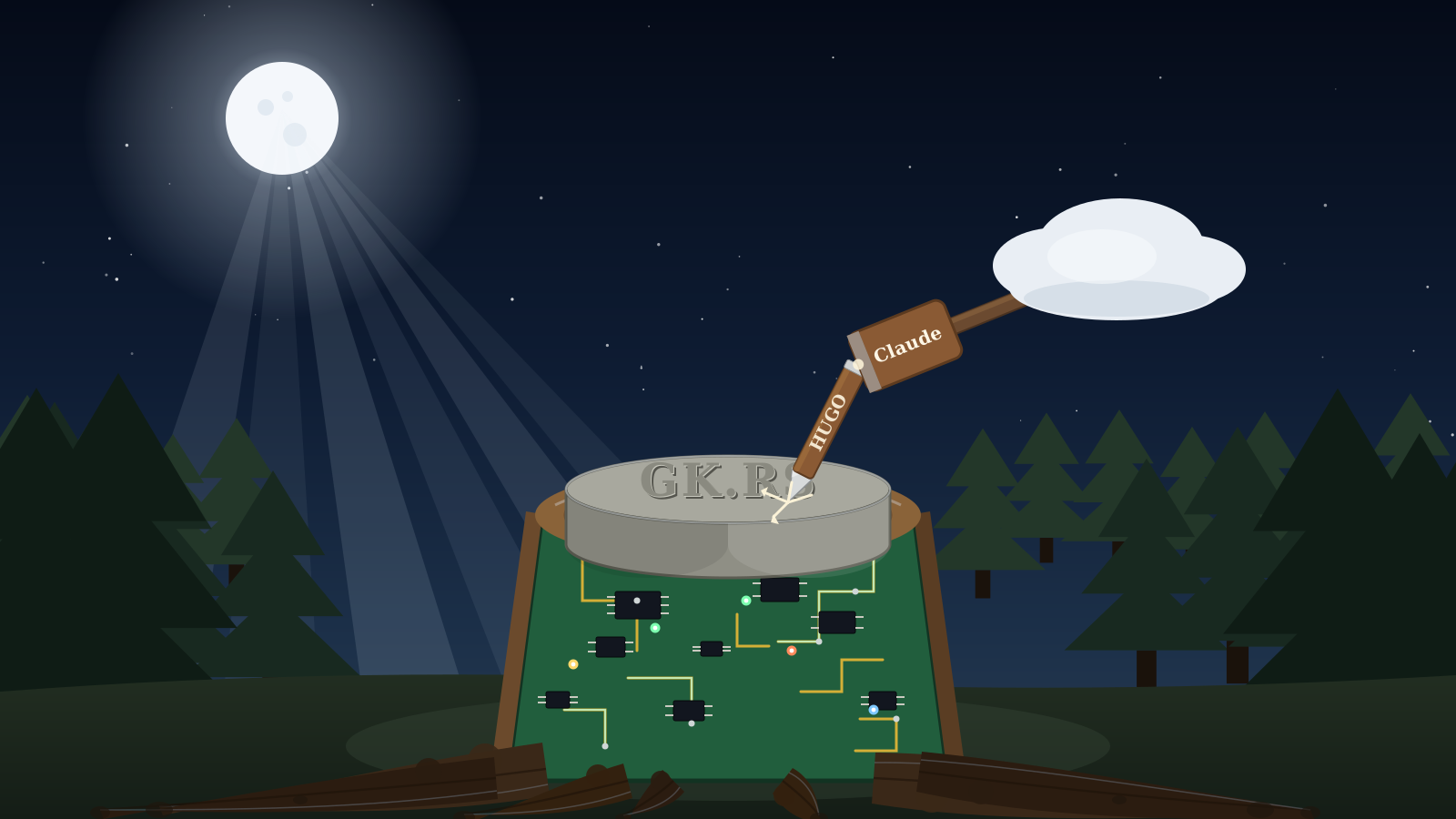
Since we live in genuinely interesting times, there’s no room left for boredom, and often none for rest either — it mostly comes down to managing priorities (yes, I’ve filed socializing under priorities too, because without investing in friendships, they die as well). There was no time left for hobbies.
This site, in some form, had existed as an idea for a long time already. With all the positive stories about what AI can do, I decided to actually put it to the test — through the project of building this site.
I paid for a Claude Pro license (claude.ai), installed it on my computer, and got started.
The first prompt (copied word for word from my Claude history):
“I want to build a personal website, static type (not WordPress or some other dynamic site with a database). The site would have 1 About page, 1 CV page, 1 Books section with notes and quotes from books I’ve read (one page per book, plus a main page with a mind map of all the books), and a Blog section with individual pages for each post. Question: how should I set up my working environment, and what tools do I need for a project like this? Should I rent a server right away, or only once the site is finished?”
Claude started offering suggestions and defining the next steps, and after just 2 hours of work, the skeleton of the site was there. Important note — I didn’t see a single line of code (let alone write one). Claude did it all on its own. So a site like this can, today, with AI, be built by anyone who needs one.
It was genuinely interesting to see what the “About” section looked like when AI wrote it from my CV and my earlier prompts. Of course, that’s not what ended up on the site — because what’s the point of a site if AI writes the content.
The idea is for the site to keep growing with new projects, books, and blog posts. I write mostly for myself — so I can quickly come back to certain thoughts, ideas, and things I’ve read or done. Maybe someone finds something useful for themselves here too, copies it, builds on it, and moves forward — the way Austin Kleon describes it in his book Steal Like an Artist.